What does a brand strategist actually do?
This post is for founders who are considering working with a brand strategist for the first time, or who have worked with one before and aren't entirely sure what they got for their money.
It's a fair question. Brand strategy is one of those services that can be described in ways that sound meaningful and deliver very little, or described modestly and deliver an enormous amount. The difference is rarely in the language. It's in the process, the rigour, and whether the thinking produced actually changes how the business shows up in the market.
I've worked with over 100 founders across nearly a decade of brand strategy practice. This is what the work actually involves, and what it should produce.
What a brand strategist is not
It's worth starting here, because the confusion is genuine.
A brand strategist is not a graphic designer. A graphic designer creates visual assets: logos, colour palettes, typography, layouts. That work is valuable and skilled (and I offer it). It is not strategy.
A brand strategist is not a marketing consultant. A marketing consultant typically works on how to reach an existing audience with an existing message. A brand strategist works on what the message should be, who the audience actually is, and what position in the market the business should occupy, before any marketing begins.
A brand strategist is not a business coach. There is overlap: brand strategy and business strategy are not fully separable, but the brand strategist's specific job is to translate business thinking into brand decisions: positioning, voice, identity direction, the story the business tells about itself and why.
And a brand strategist is not a copywriter, though good brand strategy produces the foundation that good copy is built on.
What a brand strategist actually does
The work of a brand strategist is to answer a set of questions that most businesses have never formally asked — and to turn the answers into decisions the business can act from.
Those questions are:
What does this business actually stand for, not in general terms, but specifically enough to filter every decision through?
Who is the ideal client, really, not a demographic, but a person with a specific problem, specific language, and a specific reason to choose this business over every alternative?
What position does this business occupy in its market, and is that position specific enough to be owned, or is it the same vague territory as a dozen competitors?
What does the business promise, and is that promise specific enough to be believed, differentiated enough to matter, and true enough to be kept?
How does the business sound - not just in tone of voice guidelines, but in the actual language it uses, the phrases it owns, the things it says and the things it never says?
Answering these questions rigorously, in the right order, with the right research behind them, that is what a brand strategist does.
What the process looks like in practice
Every brand strategist works differently. This is how I work.
The Brand Authority Method™ runs brand strategy across five structured sessions, each one building on the last. The sessions cover Purpose, Personality, People, Positioning and Planning, in that order, for specific reasons.
Purpose comes first because it's the filter everything else runs through. Without a clear sense of what the business believes and why it exists beyond revenue, positioning becomes an exercise in sounding good rather than being precise.
Personality follows because a brand that knows what it stands for still needs to know how it behaves — how it sounds in a sales conversation, in a piece of content, in the way a proposal is written. The personality work produces a voice specific enough to be useful and consistent enough to be recognisable.
People is the research-heavy session. Voice of customer work, competitor mapping, audience analysis. The goal is to get beneath the surface of who the ideal client is and understand the specific language they use about their problem — because that language goes directly into every piece of communication the brand produces.
Positioning pulls everything together. Competitive analysis, differentiation, the brand promise, the positioning statement. This is where the brand finds its specific place in the market — and where a named framework or methodology, if the founder has one, gets articulated as intellectual property rather than left invisible inside the practice.
Planning closes the strategy stage with a structured conversation about what comes next — the visual identity brief, the copy brief, the website brief — and how each subsequent phase will be held against the strategic decisions that have just been made.
What a brand strategist produces
At the end of a strategy engagement, a founder should have a set of specific, usable decisions — not a document full of values statements and vision paragraphs that sit in a folder and are never looked at again.
Specifically: a positioning statement precise enough to put on a website. An audience definition specific enough to write to. A brand promise clear enough to hold a designer to. A voice document specific enough that someone else could write for the brand and get it right. A named methodology or framework, if the founder has one, articulated in a way the market can find and refer.
These are the tools the rest of the brand work is built from. Visual identity, website copy, photography direction, content strategy — all of it flows from the strategy, or it's guessing.
What a brand strategist should not do
A brand strategist should not tell you who you are. The strategy is in the business already, in the founder's instincts, the client relationships, the work that has produced the best results. The strategist's job is to excavate it, name it, and make it usable. If a strategy engagement produces a brand that feels borrowed or generic, the process didn't go deep enough.
A brand strategist should not work in isolation from the business owner. The research matters, the competitive analysis matters, the audience work matters, but none of it replaces the founder's knowledge of her own business. The best strategy engagements are genuinely collaborative: the strategist brings rigour and an outside perspective, the founder brings the material.
And a brand strategist should not skip to the answer. The value is in the process - in the specific questions asked in the right order, the decisions made explicitly rather than assumed, the research that confirms or challenges what the founder thought she knew. A strategy delivered as a document without a process behind it is an opinion, not a strategy.
How to know if you need a brand strategist
You need a brand strategist if your business has moved and your brand hasn't kept pace. If you're over-explaining what you do in conversations that should be straightforward. If you're attracting clients who aren't quite right, at fees that are lower than the work warrants. If you have a methodology that isn't named or visible. If you're ready to move into a new market or at a new level and the current brand wasn't built for it.
You don't need a brand strategist if you're at the very beginning - the strategy work is most powerful when there is already something real to build from. A track record, a proven offer, a founder who knows what works and is ready to scale it.
Where to start
If you're ready to find out what the strategy conversation looks like in practice, the Brand Clarity Session is the right first step. A focused 90-minute strategic conversation that identifies exactly where your brand is and isn't doing its job. €1,500 + VAT, credited in full against the Brand Authority Method™ if you proceed within 60 days.
If you're already clear that a full strategy engagement is what the business needs, you can find out more about the end-to-end process on the Brand Authority Method™ page.
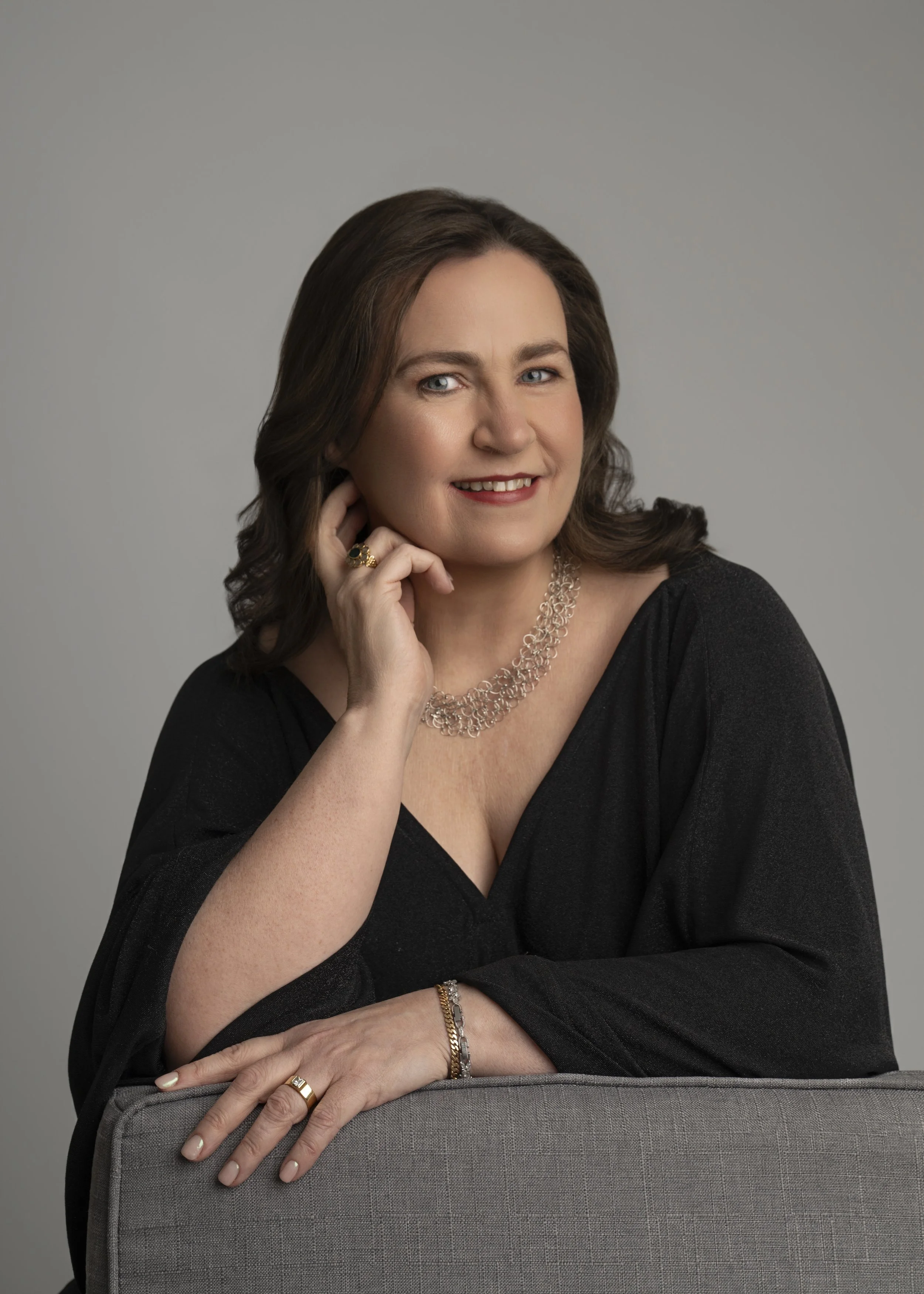
I'm Lucy O'Reilly, an award-winning brand strategist and designer based in Dublin, Ireland.
I've worked with over 100 founders and business owners across nearly a decade in practice, and I'm the creator of the Brand Authority Method™, a six-step end-to-end engagement covering brand strategy, visual identity, brand photography, website copy, and website design and build.
I work with established founders who are ready to scale, and whose businesses have outgrown their brand.