
What coaches need to think about for their website

As a coach you play a pivotal role in guiding individuals through personal and professional growth. As such, your online presence, particularly your website, serves as a crucial touchpoint for potential clients.
A well-designed website not only showcases your expertise and services but also establishes trust and encourages engagement. This article delves into key considerations you should account for when embarking on the next iteration of your website.
Understanding Your Audience
The foundation of a compelling website lies in a deep understanding of your target audience. Coaches must identify the specific needs, challenges, and aspirations of their potential clients. Are they professionals seeking career advancement? Individuals looking for personal growth? Or perhaps they're navigating a significant life transition? Tailoring your website's content, tone, and design to resonate with your audience's journey is paramount to getting the attention of your ideal customer.
Clarifying Your Brand Message
Your website is a reflection of your brand. It's essential to articulate what sets you apart from other coaches. This differentiation could stem from your unique coaching methodology, your personal journey, or the specific outcomes you help clients achieve. A clear, concise brand message that communicates your value proposition should permeate every page of your website.
Ensuring your branding tells your story and attracts your ideal customer
Your brand is represented by your branding or visual identity, on your website. It’s so important that your branding communicates your USP, is attractive to the customers you want to work with and really communicates your brand personality. Is it time to ditch the DYI logo and level up your visuals?
Streamlining the User Experience (UX)
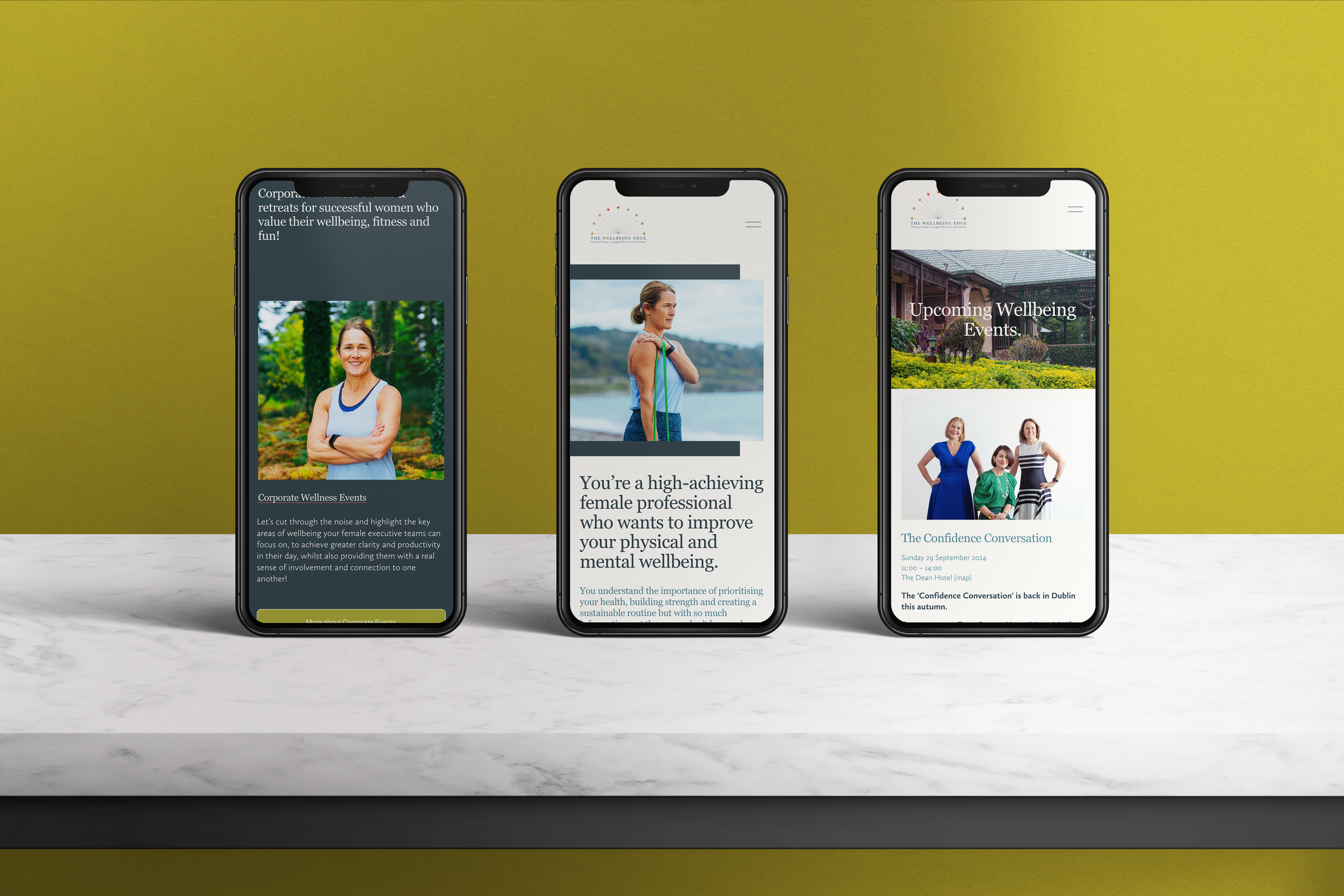
A website's UX encompasses how easily and pleasantly users can interact with it. For coaches, ensuring a seamless UX means simplifying navigation, optimizing loading times, and making the site mobile-responsive. Given that many potential clients will visit your site from their smartphone, a mobile-first approach is advisable. Additionally, integrating appointment scheduling tools directly on your site, as Squarespace and Kajabi facilitate, can significantly enhance the user experience by allowing clients to book sessions without leaving your website.
Leveraging Testimonials and Success Stories
Social proof is a powerful tool in building trust with potential clients. Including testimonials and success stories on your website can provide tangible evidence of the transformations you've facilitated. These narratives should be strategically placed to catch the attention of website visitors, perhaps on the homepage or a dedicated "Success Stories" or “Testimonials” section.
Offering Valuable Content
Content marketing is a strategic approach to attract, engage, and retain an audience by creating and sharing relevant articles, videos, podcasts, and other media. For coaches, this could mean blogging about personal development tips, sharing client success stories, or posting motivational videos. This content not only positions you as an authority in your field but also improves your website's search engine optimisation (SEO), making it easier for potential clients to find you online.
Prioritising SEO
Speaking of SEO, optimising your website for search engines is crucial in increasing visibility and attracting organic traffic. This involves using relevant keywords throughout your site's content, optimizing meta descriptions and titles, and ensuring your site's structure is search engine friendly. Tools like Squarespace offer built-in SEO features to help you manage these aspects effectively.


Showcasing Your Services
Clearly outlining the services you offer is crucial. This includes detailing the types of coaching sessions available (e.g., individual, group, online), the specific areas you specialize in (e.g., career, life, wellness coaching), and any packages or programs you offer. Transparently listing your prices can also help set clear expectations and reduce the number of inquiries about costs.
Integrating Social Proof
As mentioned, incorporating testimonials and success stories can significantly impact your credibility. Additionally, showcasing any certifications, qualifications, or memberships with professional coaching organisations can further bolster your authority in the field.
Encouraging Action
Every page of your website should encourage visitors to take action, whether that's booking a consultation, signing up for a newsletter, or following you on social media. Clear, compelling calls-to-action (CTAs) should guide users towards these next steps, making it easy for them to engage with your services.
Maintaining a Blog
A regularly updated blog can serve multiple purposes. It can attract visitors to your site through SEO, establish your expertise, and provide value to your audience. Sharing insights, tips, and personal reflections on coaching can help build a deeper connection with your audience.
Utilising Analytics
Finally, leveraging website analytics is crucial in understanding how visitors interact with your site. Tools like Google Analytics can provide insights into which pages are most visited, how long users stay on your site, and what actions they take. This data is invaluable in making informed decisions about future website iterations.
In conclusion, designing the next iteration of a coaching website involves a multifaceted approach that considers your audience's needs, clarifies the brand message, optimises the user experience, and leverages content and SEO to attract and engage clients. By focusing on these key areas, you can create a website that not only reflects your unique value but also serves as a powerful tool in your coaching business.